 Donate Now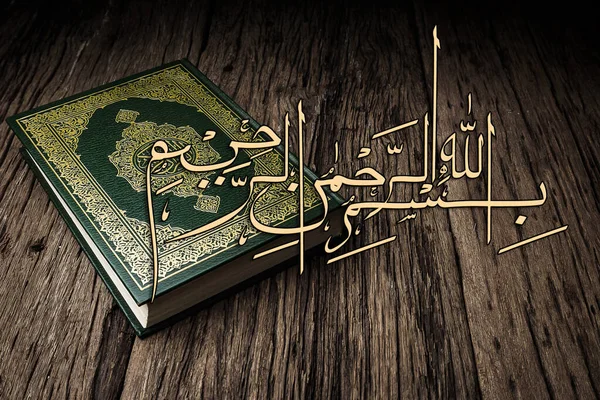



 View All Articals
15 JulBy. annoor
About Allah
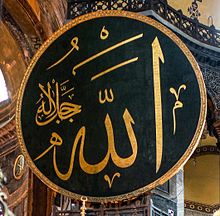
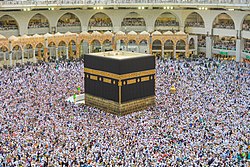
"Allah" is an Arabic word that means "God".Muslims also believe that "Allah" is the personal name of God. Allah is not the God of Muslims only. He is the God of all people and all creation.Just because people refer to God using different terms does not mean there are different gods. Many Hispanics refer to God as "Dios" and many French refer to God as "Dieu" yet they mean the same God. Many Arab Jews and Arab Christians call God "Allah" and the word "Allah" (in Arabic script) appears on the walls of many Arab churches and on the pages of Arabic Bibles. Although the understanding of God may differ between the various faith groups, it does not change the fact that the One Lord and Creator of the Universe is the God of all people. Muslims believe that God has revealed 99 of His names, or attributes, in the Qur'an. It is through these names that one can come to know the Creator. A few of these names are the All-Merciful, the All-Knower, the Protector, the Provider, the Near, the First, the Last, the Hidden and the Source of All Peace.
15 JulBy. annoor
About Islam
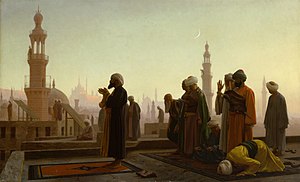
"Islam " means "surrender" or "submission". "Salam" (which means "peace") is the root word of "Islam". In a religious context the word "Islam" means "the surrendering of one's will (without compulsion) to the true will of God in an effort to achieve peace". Islam is not a new religion or cult. It is a universal way of life and civilization. Studies show that between 1.5 and 1.8 billion people in the world identify their religion as Islam. Along with Judaism and Christianity it traces its roots through Prophet Abraham and back to the first humans Adam and Eve. There are five pillars of practice in Islam. These practices must be undertaken with the best of effort in order to be considered a true Muslim: A) Declaration of faith in One God and that Muhammad is a prophet of God. B) Formal prayer five times a day. C) Poor-due "tax" - 2.5% of one's excess wealth given to the needy once a year. D) Pilgrimage to Mecca at least once, if physically and financially able. E) Fasting during the daylight hours in the month of Ramadan. There are six articles of faith in Islam. These are the basic beliefs that one must have in order to be considered a true Muslim. They are belief in: A) the One God. B) all of the true prophets of God. C) the original scriptures revealed to Moses, David, Jesus and Muhammad. D) the angels. E) the Day of Judgment and the Hereafter. F) destiny. Islam is a complete way of life that governs all facets of life: moral, spiritual, physical, intellectual, social, economical, etc. Islam is one of the fastest growing religions in the world. To become Muslim, a person of any race or culture must say a simple statement, the shahadah, that bears witness to the belief in the One God and that Muhammad is a prophet of God. The Islamic concept of God is that He is loving, merciful and compassionate. Islam also teaches that He is all-knowing and the perfect judge of affairs, and will punish (or forgive) accordingly. However, Allah once said to Muhammad, “My mercy prevails over my wrath”. So Islam teaches a balance between fear and hope, protecting one from both complacency and despair.
15 JulBy. annoor
About Muslims
Muslims (Arabic: المسلمون, al-Muslimūn, transl. "Submitters [to God]") are people who adhere to Islam, a monotheistic religion belonging to the Abrahamic tradition. They consider the Quran, the foundational religious text of Islam, to be the verbatim word of the God of Abraham (or Allah) as it was revealed to Muhammad, the main Islamic prophet. The majority of Muslims also follow the teachings and practices of Muhammad (sunnah) as recorded in traditional accounts (hadith). With an estimated population of almost 1.9 billion followers as of 2020 year estimation, Muslims comprise around 25% of the world's total population. In descending order, the percentage of people who identify as Muslims on each continental landmass stands at: 45% of Africa, 25% of Asia and Oceania (collectively), 6% of Europe, and 1% of the Americas. Additionally, in subdivided geographical regions, the figure stands at: 91% of the Middle East–North Africa, 90% of Central Asia, 65% of the Caucasus, 42% of Southeast Asia, 32% of South Asia, and 42% of sub-Saharan Africa. While there are several Islamic schools and branches, the two largest denominations are Sunni Islam (75–90% of all Muslims) and Shia Islam (10–20% of all Muslims). By sheer numbers, South Asia accounts for the largest portion (31%) of the global Muslim population, primarily across three countries: Pakistan, India, and Bangladesh. By country, Indonesia is the largest in the Muslim world, holding around 12% of all Muslims worldwide; outside of the Muslim-majority countries, India and China are home to the largest (11%) and second-largest (2%) Muslim populations, respectively. Due to high Muslim population growth, Islam is the fastest-growing religion in the world.
15 JulBy. annoor
About Quran
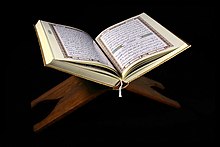
The Qur'an was not authored by Muhammad. It was authored by God, revealed to Muhammad (through angel Gabriel) and written into physical form by his companions. The original Arabic text of the Qur'an contains no flaws or contradictions, and has not been altered since its revelation. Actual 7th century Qur'ans, complete and intact, are on display in museums in Turkey and other places around the world. If all Qur'ans in the world today were destroyed, the original Arabic would still remain. This is because millions of Muslims, called "hafiz" (or "guardians") have memorized the text letter for letter from beginning to end, every word and every syllable. Also, chapters from the Qur'an are precisely recited from memory in each of the five formal prayers performed daily by hundreds of millions of Muslims throughout the world.
